Thursday, April 16, 2020

Auto Sound Systems are Becoming Entertainment Systems

 If you've been shopping lately for an auto sound system then I am fairly certain that you've come across several full entertainment systems among those in the running for your audio and entertainment dollars. Vehicles today offer everything from DVD players, individual speakers, headphones (also individually adjustable), and even dual players that will allow one different audio to be played in one section of the vehicle than another. In addition to all of these wonderful and nifty devices are many more devices that are meant to tempt, sway, and convince you to spend even more money on the auto sound system of your dreams. Some of these even offer MP3 players that connect directly to the audio system of your car, truck, or SUV.

The jury is still out for many people about the safety and sense of having a DVD player in your automobile. While this is the case, people will continue purchasing DVD players are part and parcel of their sound and entertainment systems and manufacturers will continue putting together attractive packages that offer these devices to consumers while offering incredible bargains on installation. I know that many feel that this is an unnecessary distraction to drivers. I'm one of the rare people that feels that in a day of laptops, cell phones, talk radio, fast food, Starbucks coffee, and multitasking, a DVD in the back might be one of the best features that can be added to the car in an effort to minimize distractions coming from the direction of disgruntled passengers in the rear.


I will confess that many people wonder what this has to do with an auto sound system and I can understand that question so please bare with me. One of the features that sound system manufacturers are offering is a feature that allows individual headphones for passengers in the back along with LCD monitors that rest in the back of the head rests so that passengers in the back can both see and hear the DVDs being played without causing a distraction for the driver (either by noise or by means of flashing lights).

The truth of the matter is that having the noise from a DVD player in the back is no worse of a distraction than having disgruntled children competing for your attention from the backseat or listening to audio books as you drive along. I must admit that audio books are one of my current and readily admitted addictions. The problem with those is that on occasion some of the books simply aren't meant for young ears. I try to keep my books limited to popular stories that are suitable for children whenever my children are riding along and save the sometimes steamy and often hilarious tales of Stephanie Plum for when I'm riding alone. Another great reason to make sure you have an auto sound system that at the very least reads and understands MP3s.

The technology exists for this and I expect to see even more innovations technologically speaking in the way of auto sound systems and entertainment systems in the near and not so near future. We live in a world where technology is constantly evolving and we should see many new and wonderful features that will make our lives much more enjoyable for our daily commute.

Whether you are new to the technology of today, fighting it mightily, or happily embracing it-it isn't showing any signs of stopping or slowing down. This means that you will eventually have to face the fact that the old ways of buying an auto sound system will soon be obsolete. I often joke that we are rapidly becoming a society that is catching up with the "Jetson's" vision for the future. I also loudly lament my lack of a Rosie. At any rate, I am glad to see that the new technologies in auto sound systems are offering less of a one size fits all image and offering much more individual systems, even for passengers within a vehicle

5 Ways Auto Navigation Systems and GPS Technology Improve Lives

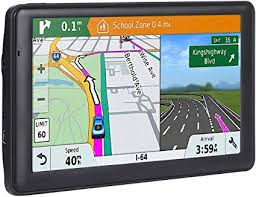
Global positioning technology is used in most of today's GPS and auto navigation systems. The truth of the matter is that this technology while once reserved for the wealthy is now trickling into mainstream America. We are seeing this technology in cell phones in order to assist with 911 calls. We are seeing this technology in automobiles in order to track and possibly retrieve them if they are stolen. We are also seeing this technology used to help lost animals find their way back to the homes of their families. The truth of the matter is that there are many ways in which GPS technology is currently making our lives easier.

Below you will find a great number of uses for GPS and auto navigation system technology that currently exist. Even more amazing is the fact that new discoveries for these technologies are being made every day and over time there will be an even greater variety of methods to utilize this technology for the benefit of society.


1) Keep track of teens and children by using services such as uLocate Communications. This technology allows you to track members of your family by their cell phones. With the click of a button on your cell phone or simply tracking from home via the Internet you can find all members of your family that are carrying their cell phones. The benefits of this feature to your peace of mind alone are well worth the monthly subscription fee, which can be as low of $4 a month depending on which service you choose.

2) Keeping track of the elderly. This is especially useful if you have a loved one that suffers from Alzheimer's or some other form of dementia. Technologies are improving continuously and will hopefully reach a point very soon where ID bracelets much like the medic alert bracelets will allow GPS tracking that is even more reliable for the elderly. The relief of knowing that you can find your loved one even if he or she has wondered off and forgotten how to get home is something that you really can't put a price tag on.

3) Lost pets. I mentioned this earlier but it is worth repeating. The technology exists to have your pets implanted with chips or even to have chips placed in collars that allow you to readily locate your precious pet without spending endless hours of searching and whistling. The real beauty of this is that you won't have to spend hours comforting sad children; you can take them to the computer and let them help you track Fido.

4) Finding shortcuts along your route to work, job interviews, important meetings, conventions, and personal appointments. This is great if you are running into a time crunch or worse need an alternate route as the result of a traffic jam or road closure.

5) GPS technology allows security and safety in many cars that utilize On Star technology as well. This technology cannot only track the location of your car but also be used to call for help in emergency situations. This device is activated by the push of a button and can even be used by small children in emergency situations.


There are many great ways that GPS and auto navigation systems and technology are being used each and every day to improve our lives and provide peace of mind. The methods mentioned above are simply icing on the cake.

4 Great Reasons to Enjoy Geocaching with your Auto Navigation System

Geocaching is a great way to spend an afternoon, a day, or a weekend. This activity seems to be taking the nation by storm and is responsible for the rising popularity and availability of GPS and auto navigation systems on the market today. Many people aren't simply purchasing minimal systems that guide them to their coordinates with beeps and blips but investing in complete systems that can provide much more useful tracking and mapping utilities.

Regardless of whether you are purchasing the bare minimum system when it comes to geocaching or investing in a top of the line auto navigation system that has all kinds of bells and whistles, I am fairly certain you will find that geocaching is a great activity for many reasons. Everyone who participates in this activity has something special that they enjoy and appreciate about it. Below you will find some of the more popular reasons that people choose geocaching as a fun way to use their GPS devices.


1) Being a kid again. You heard correctly, this is my personal favorite reason to participate in geocaching. I remember going on treasure hunts as a child and drawing out intricate maps and pretending for days, even weeks on end that I was a pirate in search of some rare treasure. That treasure usually ended up being holly berries or a rather large pinecone, but it was the thrill of the hunt that was important.

2) Enjoying the great outdoors. You may argue that one can do that anytime and wouldn't really need geocaching in order to do so. You would be correct, however, geocaching can take you hiking, biking, swimming, and mountain climbing in search of one little prize stash. Most of us wouldn't tackle all of those things in the course of an afternoon. In other words it's a way to experience the great outdoors only intensified.

3) Learning about others. When Geocaching you can find all kinds of neat and nifty treasures. The idea is that if you take something you should leave something behind and create a log. You learn about a lot of different people by examining the treasures they've left behind and reading the logs. You will experience many different people from many different cultures as this seems to be a rather universal pastime in which all ages and cultures spend hours upon hours participating.

4) Being a part of something bigger than us. I remember watching Treasure Hunters on NBC last summer. They were all off in search of a specific treasure but kept getting clues at different destinations along the way. Geocaching might not have a million dollar payoff but there are little treasures along the way and many people participate which makes the hunt thrilling and fun at the same time. By participating you are one of many people who will tread the same ground and seek the same treasure. It is a unifying experience in many ways and can be excitingly competitive.


If you have never experienced geocaching, I hope you will at least consider this fun and thrilling pass time as you check out possible auto navigation systems and other GPS technology that might be good for you and your family. Geocaching is one of many ways that auto navigation systems can bring more life to your daily living.

Tuesday, April 7, 2020

Autistic Children and the Strain on Marriage

Unfortunately, in modern times, many marriages end in divorce or separation. This statistic rises even higher when you mix in an autistic child. No matter how loving and understanding you both may be towards your child, the truth is that autism is a very difficult matter, and strain on the marriage is not uncommon. By trying to stay positive about your situation, and by working to keep your marriage healthy, you and your spouse can avoid marital problems and hopefully survive the trying times of raising an autistic child.

Why did you marry your husband or wife? By asking yourself this question often, you can focus on the good things in your marriage. Raising a child with autism is stressful, and if you are stressed, you have a tendency to snap at another person for the smallest missteps. Instead of focusing on these bad qualities, take some time to enjoy one another the way you did at the beginning of the relationship. This may include spending some time apart from your children. When you find out that your child is autistic, it is beneficial to make sure that you and your spouse are not the only two people with whom your child will respond. A grandparent, aunt or uncle, mature sibling, or nanny are good people to have in your child's life in the most intimate way possible. This way, alone time with your spouse is possible. 


Work together with your spouse to help you child, instead of fighting with one another. It is very likely that you will have different ideas about what to do in certain situations, so be prepared to compromise and always seek professional consultations before making any medical decisions for your child. By working together, remember that you are giving your child the best opportunities. Try to set apart time every week to spend together as a family, especially if one parent or the other is the primary caregiver. 

Lastly, seek help when you need it. Part of any successful marriage is spending some time apart to focus on individual needs, and it is no different when you have an autistic child. However, if you find that you and your spouse are not happy unless you are spending time alone, it is time to reevaluate the situation. A family or marriage counselor can help you and your spouse get back on the right track to a happy life together. It might also be beneficial to meet other couples raising autistic children. You are not alone, and it is never easy. By making an effort to keep your marriage happy, even when you are stressed with the task of raising an autistic child, you and your spouse can ensure that your marriage does not end in a messy divorce.  

Are We There Yet? Family Vacations with Autistic Children

Although planning a family vacation with children may make any parents pull out his or her hair, it can be a rewarding experience for everyone in the end. It is no different if you have an autistic child in the family. The important thing to remember is that you need to be prepared for whatever life throws your way. To an autistic child, vacations can be scary and confusing, or they can be a great learning experience, leaving behind wonderful memories the entire family can enjoy.

First, choose your location based on your autistic child's needs. For example, if he or she is sensitive to sound, an amusement park is probably not the best idea. Quieter vacations are possible at small beaches and by going camping. Overall, you should be able to find a location that everyone in the family enjoys. Once there, plan out your days accordingly. For example, you may want to see attractions very early or late in the day to avoid crowds. You also might want to consider taking your vacation during the off-season, if you children's school work will not be disrupted. These gives your autistic child more comfort if he or she is nervous in crowded situations, and provides you with piece of mind. When choosing a location, also note how far it is from you home. How will you get there? If you have to deal with an airport, remember that security may have to touch your child and be prepared for this. 


Choose a location and activities that everyone can enjoy, but also that provide learning and social interaction opportunities for your autistic child. For example, a child that does not like touch sensations may enjoy the soft sands of a beach, and the waves can provide a very different kind of feeling for him or her. Being outside, a beach is also a great place for your child to yell without disrupting others. Children who are normally non-responsive may benefit from a museum , where they can ask questions and you can ask questions of them. 

Remember that most people on vacation at the location you choose will have never dealt with autism before. Try to be understanding of their ignorance-but also stick up for your child if he or she is being treated unfairly. Know your child's constitutional laws, and also be willing to compromise. For example, if a restaurant is reluctant to serve you after your child caused a scene there last night, explain the situation and ask if it would be possible to take your food to go, even if this is normally not done. Try not to be rude to people; staring often happens, but instead of snide comments or mean looks, ignore them as much as possible and focus on having a good time with your family.

Achieving Self-control with Autism

Self-discipline is a skill that most autistic children have trouble acquiring. This includes not only inappropriate outbursts, but also habits that can be potentially dangerous, such as being aggressive towards others or causing harm to themselves, such as banging their heads off walls. To prevent these and other behaviors, one technique parents and educators can use to control autistic tendencies is self-management. Giving the child power over him- or herself is often the key to keeping control over violent situations and may be a positive step towards learning other behaviors as well.

Self-management works because the child is no longer fully controlled by others. By teaching self-management during specific times of day, such as while the child is at school or therapy, the child will be more likely to continue to practicing self-control during all times of the day. The key is to implement a program in which he or she monitors his or her own behavior and activities. Begin with short amounts of time, and continue to monitor the child from a more passive standpoint. Every ten to fifteen minutes remind the child that he or she is in control and needs to monitor and be aware of good and bad behavior. 


This monitoring is a form of self-evaluation. When a child is in control, he or she may think more closely about behavior in the past and present. Set clear goals with the child-for example, an afternoon with no aggression towards others or a day at school with no self-injury. Every fifteen minutes ask the child how he or she is doing. Is the goal being met? If the answer is no, perhaps the child is not ready for self-management, or perhaps the goals are too unattainable. You want to make sure that the goals are easy to reach at first, and then move the child towards more difficult goals in the future. When a child is successful at self-monitoring, he or she will have a more positive attitude towards the experience.

Of course, an important part of self-management is a rewards system. Have the child come up with his or her own reward, depending on interest. Reinforcement will make these good behavior goals more clearly marked in the child's mind, and by choosing and rewarding him- or herself, the child will feel completely in control of the self-management system. Choose simple rewards to start, such as smiley faces for every goal met and sad faces for every goal not met, and work up to a larger goal, such as a special activity or new toy when a certain amount of smiley faces has been attained. 

These types of programs do not develop overnight, so it is important that you and the child have enough time to devote to a self-management experience. By reinforcing good behavior with rewards, as determined by the child instead of by an adult, he or she will be more likely to carry this on even when not participating in the program. If your autistic child is mature enough, this could be a good treatment program to try.

A Gift of Sight: Visual Perception Treatment for Autistic Children

Autism effects every child differently, so it is difficult to find the exact treatments your child needs to cope with his or her symptoms. One thing that effects some autistic children (though, not all) is problems with visual perception. By using some standardized methods to help improve visual perception, you can give your child the ability to see the world more clearly, making learning and comprehension easier and possibly curbing some behavior problems as well.

Autistic children mainly have problems with sensory overload and distortion. These are some of the same problems many people not suffering from the disorder develop, and so many treatment options have become available. Individuals with autism often find, however, that the sensory overload of the world due to light, colors, contrast, shapes, and patterns, is too much to handle, causing them to act out or shut down in general.  This is sometimes a genetic condition that is simply enhanced by the autism, so if the child's parents have trouble with reading or have been otherwise treated for visual perceptive problems, there is a good chance that the child needs help as well. 


The Irene Method is one effective way to treat visual perception disorders. This method uses color to create a more harmonized world. You may have heard of these methods if anyone has ever suggested using a color filter over the page when reading to be able to read better and more quickly. This method is proven to work, and if your autistic child is at the maturity level of reading, you may want to try these color filters to see if there is a difference in speed and comprehension. However, it is more likely that your autistic child will benefit from color filters during the entire day, not just when reading. Special glasses have been made using colored lenses to conquer this problem. Not every child responds the same way to every color, so it is a process of trial and error to find out which color is the one blocking the harmful light. You can also choose to use colored light bulbs in your home to help autistic individuals with their visual perception problems. 

This method mainly helps children in 4 areas: depth perception, social interaction, learning, and physical well being. The colors help the child determine how far he or she is from an object, and the world becomes more three-dimensional, helping depth perception. Social interaction also improves because the child feels as though he or she is in a calmer world and can more clearly see and interpret facial expressions. The colors make it possible to learn, especially when reading, and overall, the child will feel better, because it helps reduce headaches and dizziness. By testing this technique and others to help visual perception problems, you can help your child better cope with the world and his or her autism.